April 14, 2026
CBAM Is Coming: What the Carbon Border Tax Means for Steel Buyers — and How to Stay Ahead
CBAM is adding carbon costs and complexity to steel sourcing—making data-driven, flexible procurement essential for staying competitive.
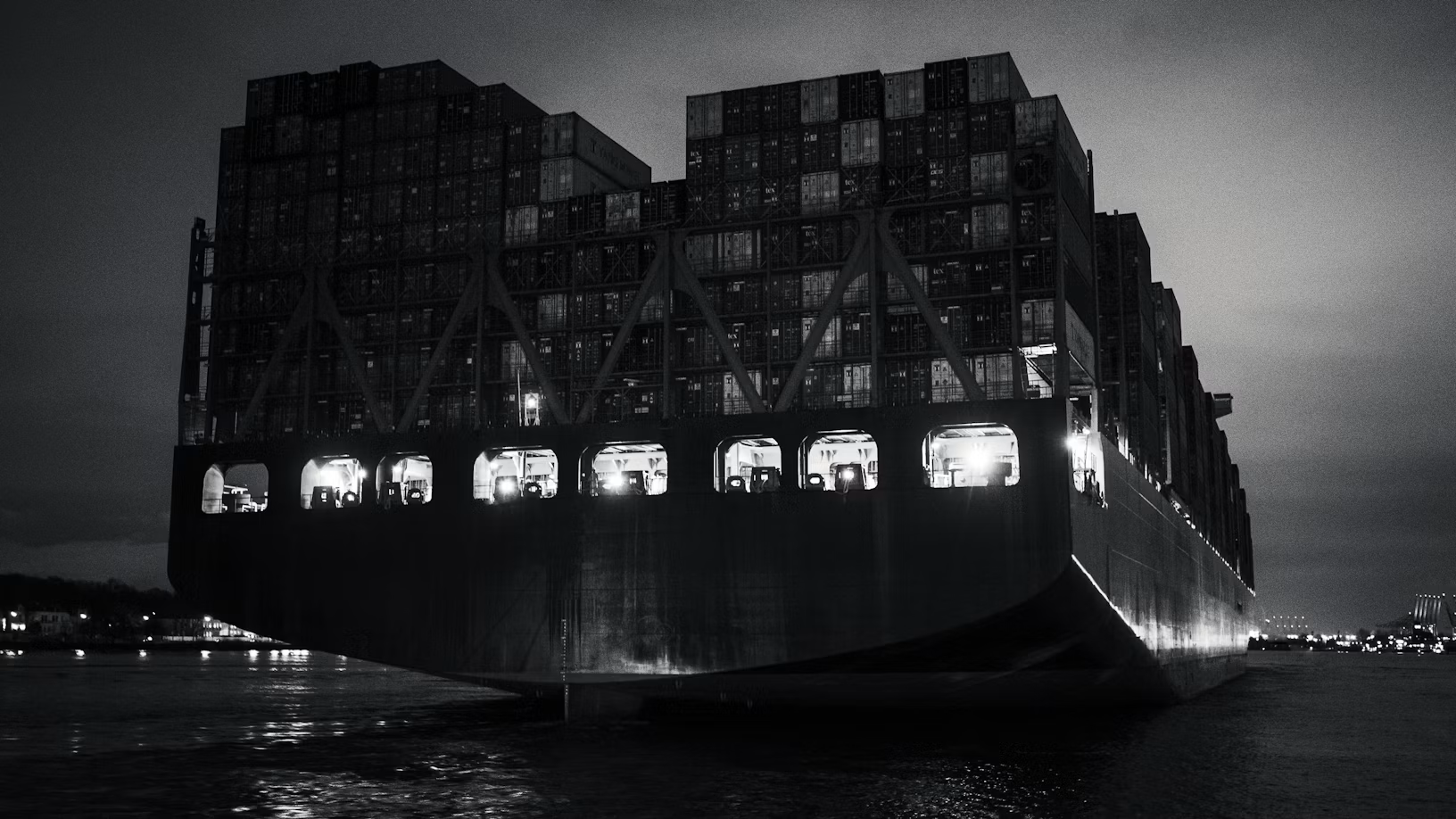
Following the rise of steel tariffs, another major force is now reshaping the global steel market: CBAM — the Carbon Border Adjustment Mechanism.
While tariffs have already increased costs and disrupted supply chains, CBAM introduces an entirely new level of complexity — one that moves beyond pricing and into carbon accountability.
For steel buyers, this is more than just another regulation. It represents a structural shift in how steel is sourced, evaluated, and procured in the years ahead.
What Is CBAM?
CBAM is the European Union’s mechanism designed to apply a carbon price to imported goods, including steel.
In practice, this means imported steel will increasingly be assessed not only on material cost, but also on the carbon emissions generated during production.
Under CBAM:
- Imported steel will be taxed based on embedded carbon emissions
- Buyers will need to report and verify emissions data
- Higher-emission steel products will become significantly more expensive
The aim is to create a more level playing field between EU producers — who already operate under carbon pricing systems — and overseas producers who historically have not faced the same environmental costs.
But while the policy objective is environmental, the commercial implications for buyers are substantial.
Why CBAM Matters for Steel Buyers
Unlike traditional tariffs, CBAM is highly data-driven and supplier-specific.
That means two seemingly similar steel products could carry very different overall costs depending on how and where they were produced.
Factors such as:
- Production methods
- Energy sources
- Emissions intensity
…will all influence the final cost of imported steel.
This creates a major shift in procurement strategy.
Steel sourcing is no longer simply about securing the lowest price — it’s about balancing:
- Price
- Carbon exposure
- Supplier transparency
- Compliance risk
The Real Impact on Procurement Teams
More Complex Pricing Structures
For procurement teams, steel pricing is becoming significantly more layered.
Buyers now need to account for:
- Base material costs
- Logistics and transport
- Tariffs and trade duties
- Carbon-related costs under CBAM
A supplier that initially appears cheaper may ultimately become more expensive once carbon costs are factored in.
This makes supplier comparison far more complicated than traditional quote analysis.
Increased Administrative Pressure
CBAM also introduces new reporting and compliance responsibilities.
Procurement teams will increasingly need to:
- Collect emissions data from suppliers
- Verify reporting accuracy
- Ensure compliance with EU regulations
- Maintain documentation and audit trails
For many organisations, this represents an entirely new operational burden.
Supply Chain Reshaping
As carbon pricing becomes more influential, demand is likely to shift toward lower-emission and more transparent suppliers.
This could favour:
- EU-based producers
- Suppliers with verified emissions reporting
- Lower-carbon production facilities
At the same time, high-emission suppliers may become commercially less viable — even when their base steel prices remain competitive.
Reduced Supplier Availability
Not every supplier is prepared for CBAM requirements.
Some may struggle to provide verified emissions data or meet compliance standards, potentially reducing the pool of viable suppliers in the short term.
This makes procurement flexibility more important than ever.
Why Traditional Procurement Methods Are Falling Behind
If rising tariffs exposed weaknesses in traditional procurement processes, CBAM intensifies them further.
Manual sourcing methods were built for simpler markets. Today’s environment requires buyers to assess not only price and lead times, but also:
- Carbon exposure
- Supplier transparency
- Regulatory compliance
That complexity makes traditional procurement increasingly inefficient.
Procurement teams relying on spreadsheets, email chains, and limited supplier networks are finding it harder to:
- Compare suppliers effectively
- Access accurate market information
- React quickly to regulatory changes
- Diversify sourcing strategies
In a market shaped by both tariffs and carbon regulation, slower procurement processes create commercial risk.
The Shift Toward Smarter, Data-Driven Procurement
While CBAM introduces new challenges, it also creates an opportunity for businesses to modernise how they procure steel.
Forward-thinking buyers are increasingly focusing on:
- Diversifying supplier networks
- Improving market visibility
- Making faster sourcing decisions
- Integrating carbon considerations into procurement strategy
- Building more resilient supply chains
As a result, digital procurement platforms are becoming essential tools for navigating the modern steel market.
How STEX Helps Buyers Navigate CBAM
Platforms like STEX are designed to bring greater speed, transparency, and flexibility to steel procurement.
As regulatory complexity increases, these capabilities become even more valuable.
Greater Supplier Visibility
With access to a broader network of suppliers, buyers can more easily identify compliant and competitive sourcing options.
This reduces reliance on any single supplier and improves resilience when regulations or carbon costs shift.
Faster, Smarter Quote Comparison
As pricing becomes more complex under CBAM, procurement teams need the ability to compare multiple supplier offers quickly and efficiently.
STEX helps buyers benchmark suppliers side-by-side, improving visibility into pricing and sourcing opportunities.
Increased Procurement Flexibility
When market conditions change rapidly, agility matters.
STEX enables buyers to pivot between suppliers faster, adapt sourcing strategies more effectively, and respond to evolving carbon costs with greater confidence.
Building Future-Ready Procurement Processes
CBAM is unlikely to be the last major regulatory shift affecting steel procurement.
Carbon transparency and sustainability reporting will continue to grow in importance across global supply chains.
By digitising procurement processes now, businesses can position themselves to manage future compliance requirements more effectively while improving operational efficiency at the same time.
Procurement Is Becoming Strategic
The steel market is entering a period where procurement decisions have a direct impact on competitiveness, resilience, and long-term profitability.
Buyers are increasingly moving toward:
- Dynamic sourcing instead of fixed supply chains
- Data-driven procurement instead of manual comparison
- Flexible supplier networks instead of over-reliance on a few partners
This shift is not simply about reducing costs — it’s about building smarter, more adaptable procurement operations for the future.
Conclusion: Turning CBAM Challenges Into Opportunity
CBAM will undoubtedly add complexity to steel procurement. But for businesses willing to adapt, it also creates a clear opportunity to modernise sourcing strategies and gain a competitive advantage.
Companies that embrace smarter, more flexible procurement approaches will be better positioned to:
- Navigate rising carbon and tariff costs
- Improve supply chain resilience
- Make faster, more informed sourcing decisions
- Stay ahead of evolving regulations
Platforms like STEX are helping drive this transformation by giving buyers the tools needed to operate with greater clarity, speed, and control in an increasingly complex market.
In a world shaped by tariffs, carbon regulation, and supply chain uncertainty, procurement is no longer just about buying steel.
It’s about buying smarter.

OTHER POSTS